“It is not only acceptable – but essential -to be different, for uniformity renders life monotonous and drains it of vitality.”
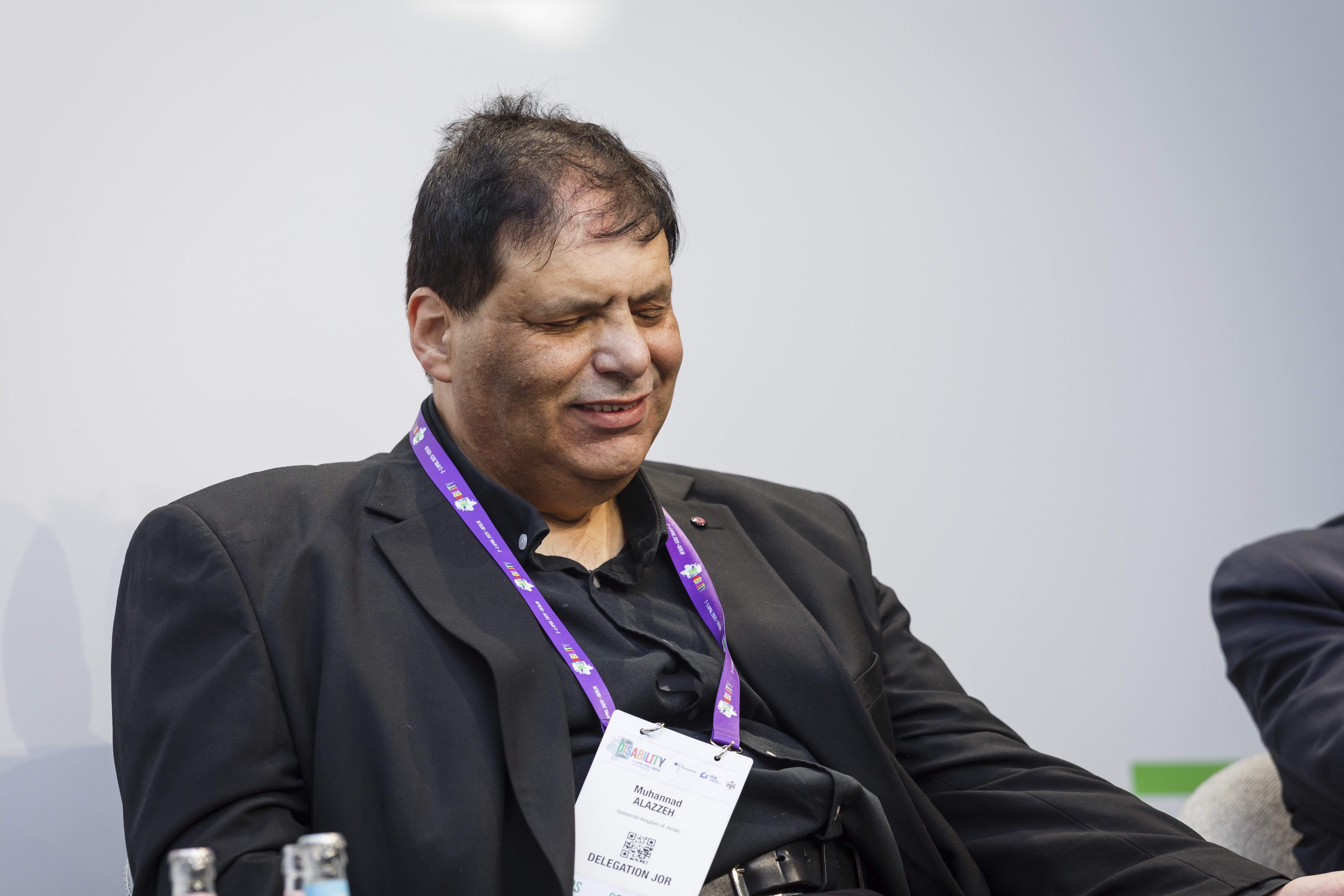
About
This document presents an overview of my most significant contributions during my first term of membership (2022–2026), as well as my proposed priorities for the forthcoming term (2026–2030), should I be honored with re-election. It reflects my sustained commitment to advancing the Committee’s mandate and to further strengthening the effectiveness, coherence, and credibility of its work.
Background
- PhD in Comparative Criminal Law and Bioethics, awarded with honors.
- Higher Diploma in Good Governance, Public Policy, and Anti-Corruption, International Institute of Social Studies (ISS), The Hague, Netherlands.
Academic Qualifications
Professional Experience
More than twenty years of professional experience in the field of human rights, with a particular focus on the rights of persons with disabilities, children’s rights, and women’s rights.
Accredited legal and human rights expert with several international and regional organizations, including the World Health Organization (WHO), the United Nations Population Fund (UNFPA), ESCWA, the League of Arab States, CBM, AIDOS, and the Gulf Cooperation Council, in addition to multiple governmental bodies.
Active contributor to legislative review and public policy development processes, including the review of the Law on the Rights of Persons with Disabilities in Pakistan, labor regulations in Saudi Arabia, and reproductive health and women’s rights strategies in Jordan.
Lead technical expert in the development of national strategies on inclusive education, deinstitutionalization, and accessibility in Jordan.
Regular columnist on enlightenment, human rights, political analysis, and public affairs in several national and international newspapers.
I am confident that this diverse academic and professional background enables me to contribute constructively to the Committee’s work, particularly by strengthening the quality of its deliberations, concluding observations, decisions on individual communications, and engagement with organizations of persons with disabilities (OPDs) and States Parties, through the provision of rigorous, technical, and knowledge-based expertise.
Key Contributions to the Committee (2022–2026)
From the Committee’s first session, I proactively assumed the role of country rapporteur for States Parties representing broad continental, cultural, political, and economic diversity, including, inter alia, Germany, Kazakhstan, Palestine, the Democratic People’s Republic of Korea, and Pakistan. In this capacity, I have consistently sought to ensure that concluding observations are framed in a flexible and context-sensitive manner, taking into account differences in legal systems, economic conditions, and national frameworks, while remaining fully aligned with the Convention.
I served as Coordinator of the Working Group responsible for the follow-up report on the situation of persons with disabilities in the Gaza Strip and the occupied Palestinian territory, including East Jerusalem. This role entailed managing dialogue with OPDs in the Palestinian territories, Gaza Strip, and Lebanon, as well as engagement with United Nations agencies, humanitarian organizations, and representatives of relevant State missions, including Palestine and Egypt. I was responsible for safeguarding the objectivity, balance, and independence of the report, ensuring that its drafting, discussion, and conclusions remained free from political influence. I also represented the Committee at an international press conference in autumn 2025 to present the report’s findings.
Throughout my term, I actively participated in working groups aligned with my areas of expertise, including the Working Group on Individual Communications and the Optional Protocol, the Working Group on Women with Disabilities, and the Working Group on Deinstitutionalization. More recently, I chaired the Working Group on Methods of Work. In this capacity, I contributed to the development of the Committee’s revised working methods, including the adoption of interactive constructive dialogue formats, back-to-back questions and answers, and the establishment of task forces for each State Party report to streamline deliberations and the drafting of concluding observations.
Motivation for a Second Term and Priorities for 2026–2030
Since joining the Committee in 2022, I have pursued a clear objective: to ensure that my contributions add tangible value to the Committee’s work, particularly by promoting a nuanced understanding of national contexts and by countering preconceived stereotypes related to culture, ideology, or political systems. I have consistently emphasized that the sole normative framework for the Committee’s assessments must remain the Convention on the Rights of Persons with Disabilities, together with the International Bill of Human Rights and other relevant human rights treaties.
My experience leading the Jordanian team in organizing the Third Global Disability Summit (Berlin, 2025), in partnership with the International Disability Alliance, the Government of Germany, and other stakeholders, as well as my contribution to drafting the Amman-Berlin Declaration, has significantly expanded my professional network across governments, civil society, and international organizations. This exposure will enable me to further enrich the Committee’s work by integrating up-to-date, practice-based knowledge into the review of State Party reports, engagement with civil society submissions, and the development of concluding observations, guidelines, and general comments.
As Chair of the Working Group on Methods of Work, I intend to continue working closely with fellow Committee members to further refine the Committee’s methodologies and rules of procedure, particularly with regard to constructive dialogue with States Parties, the concluding observations process, and the meaningful participation of civil society organizations, especially OPDs.
I also commit to active engagement in the drafting and development of general comments currently under preparation, as well as those that the Committee may decide to initiate in the future.
 Dr. Muhannad Alazzeh